Carlill v Carbolic Smoke Ball Co Fact Summary, Issues & Judgment
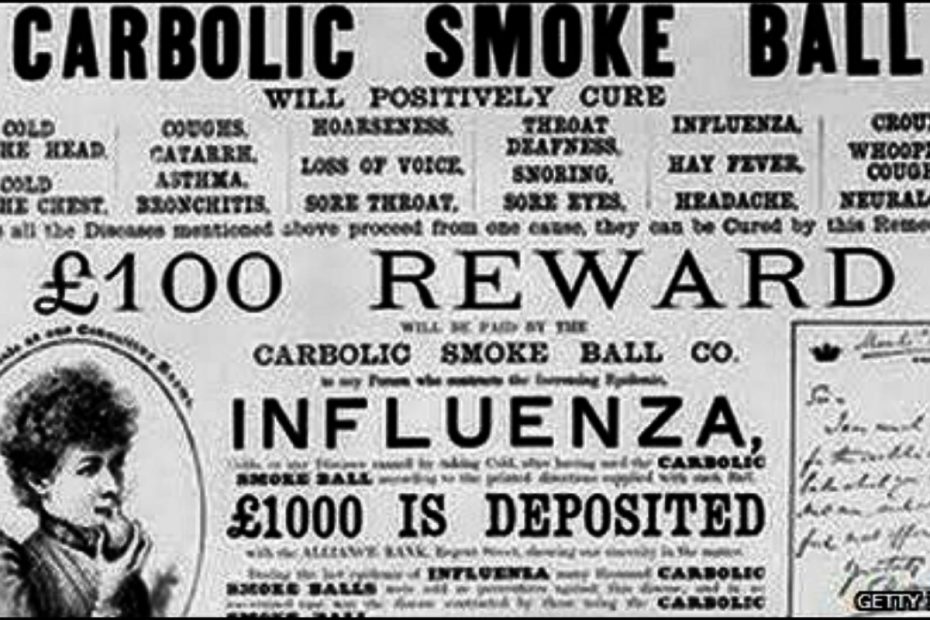
The judgment in Carlill v Carbolic Smoke Ball Co. established the principle that an advertisement can constitute a binding contract if it contains clear and specific terms and indicates an intention to be bound. The court held that the advertisement in this case constituted a binding contract, and Mrs. Carlill was entitled to the promised reward.
Carlill v/s Carbolic Smoke Ball Company
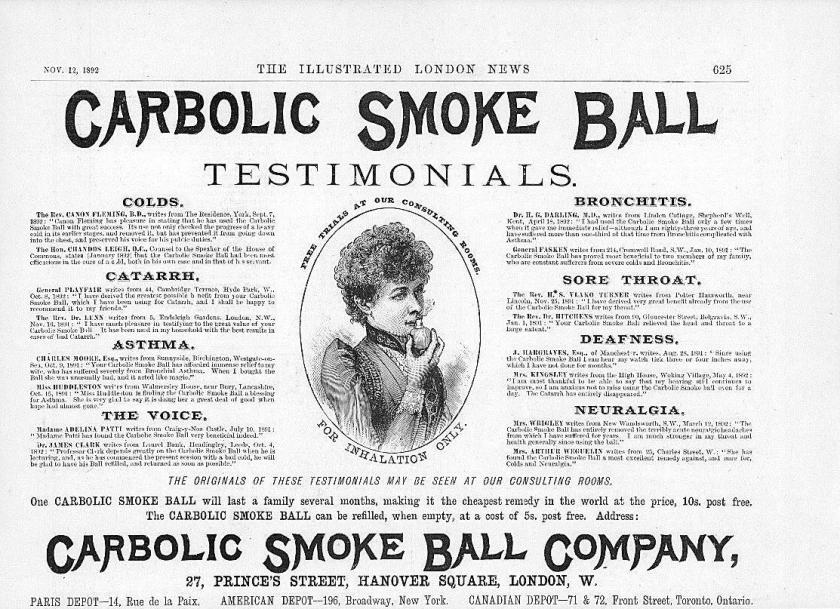
Carlill v Carbolic Smoke Ball Company Court of Appeal Citations: [1893] 1 QB 256. Facts The defendant sold a medicine which they called a 'Carbolic Smoke Ball'. When they advertised the product, they stated that they would pay a sum of money to any person who used it and still caught influenza. They claimed that….
Carlill v. Carbolic Smoke Ball Co.

INTRODUCTION:. Carlill vs. Carbolic Smoke Ball case dealt with the question if to consider whether an advertising company gimmick can be considered as express contractual promise to pay.Here since a unilateral contract was made, acceptance can be made without formal communication.. FACTS: The defendant company that is Carbolic Smoke Ball Co. was a London based company.
Carlill v Carbolic Smoke Ball Company Co. 1892 Reasoning & Facts Contract Law Case Summary

Prior Actions: Carlill v Carbolic Smoke Ball Co [1892] 2 QB 484. Defendant: Carbolic Smoke Ball Company. Brief Facts Summary: The plaintiff believing the advertisement in a newspaper stating the use of the smoke ball would prevent the influenza and flu. She used the smoke ball as prescribed in the advertisement for some time and still had an.
Carlill v Carbolic Smoke Ball Co

The claim. Mrs Carlill sued, arguing that there was a contract between the parties, based on the company's advertisement and her reliance on it in purchasing and using the Smoke Ball. It was argued: The advertisement was clearly an offer; it was designed to be read and acted upon and was not an empty boast.
Carlill Vs. Carbolic Smoke Ball Co. [1893] 1 QB 256 (CA) Legal Vidhiya

Carlill's use of the smoke ball as stipulated was the acceptance of the offer through performance, and her reliance on the promise was the consideration. Conclusion: The court concluded that there was a legally binding unilateral contract between Carlill and the Carbolic Smoke Ball Company, and as such, the company was required to pay the £.
No 70 The Carbolic Smoke Ball ad
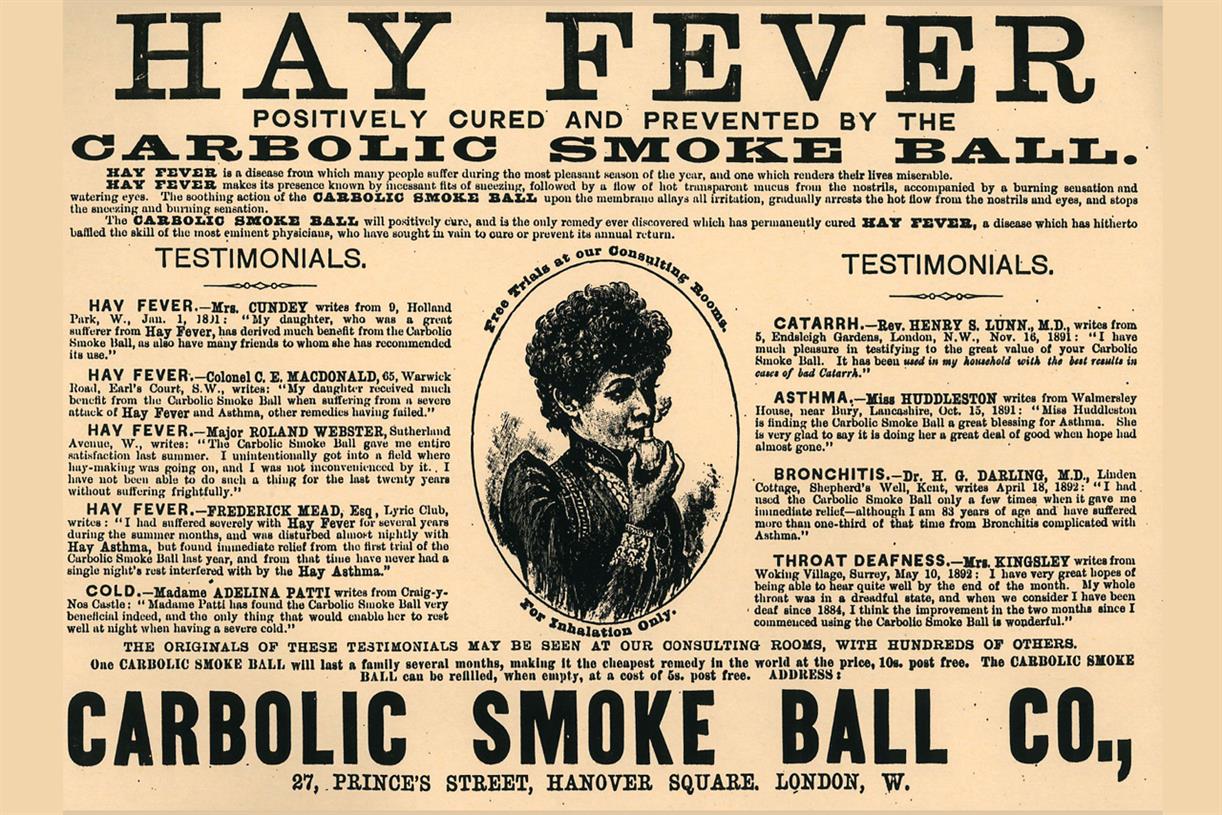
Holding: 1. Carbolic Smoke Ball's case was dismissed and it was held that Carlill is entitled to recover the 100£. Ratio Decidendi: The court reasoned that there was an express promise by Carbolic Smoke Ball Co to give a reward of 100£ to anyone who contracted influenza after using their smokeball. Justice Lindley advanced that the company.
Carlill v Carbolic Smoke Ball Company [1892] EWCA Civ 1 Griffin Law

of Carlill v. Carbolic Smoke Ball Company.' Continuously studied though it has been by lawyers and law students for close to a century, it has never been investigated historically. Even the form taken by the celebrated smoke ball itself remains a mystery, as indeed it was in 1892 at least to one of the members of the Court of Appeal who decided.
Carlill vs Carbolic Smoke Ball Co. Full Case Study The Knowledge Source YouTube

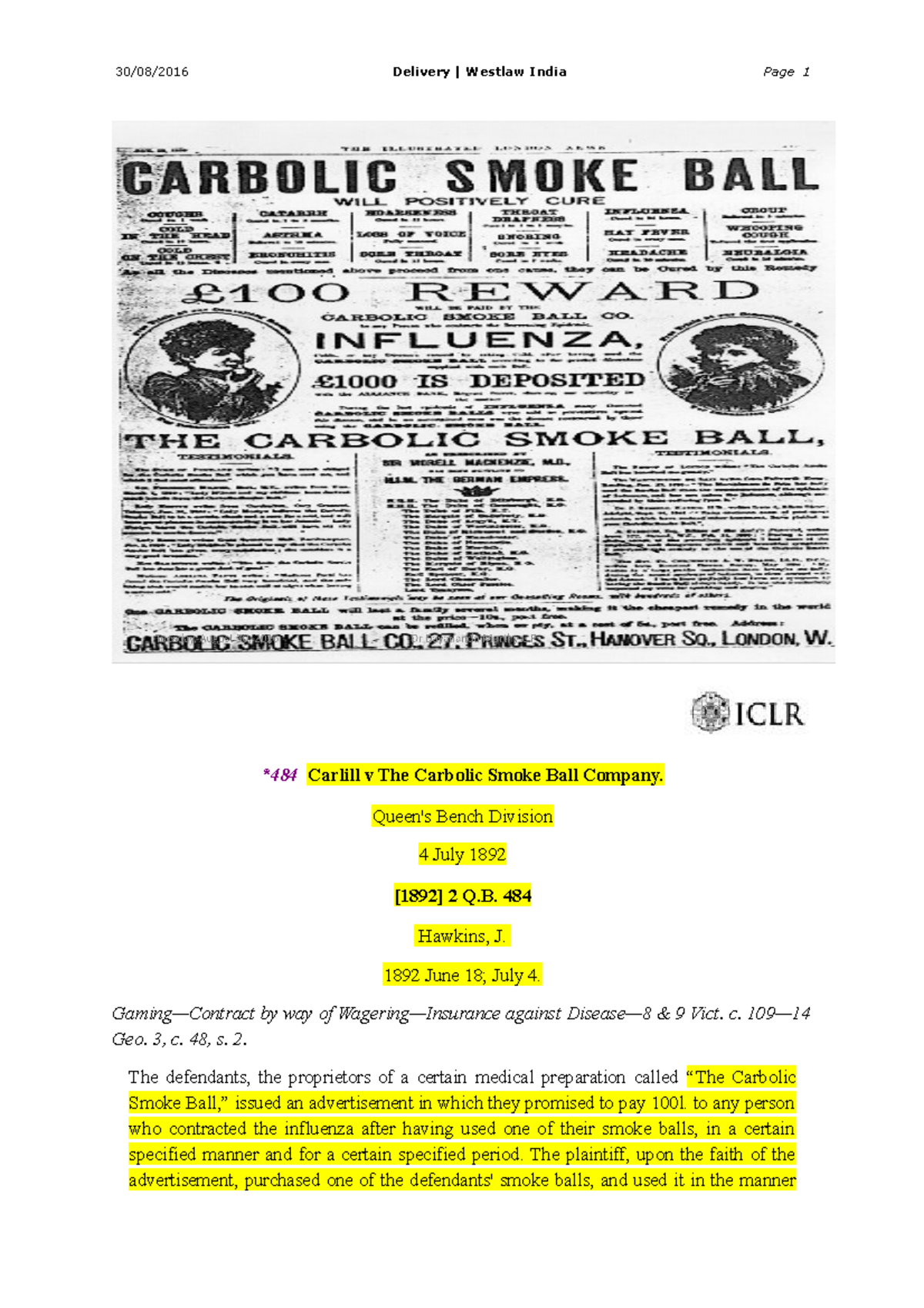
Facts. D sold the 'carbolic smoke ball' and advertised it in the newspaper, stating that £100 will be paid to any person that contracts influenza, colds or associated diseases after using the ball 3 times daily for 2 weeks, and that £1000 is deposited in the Bank showing their sincerity. C bought one of the balls at the chemist's and.
Carbolic Smoke Ball 1894 advert for the patent medicine famous for the case brought by Carlill
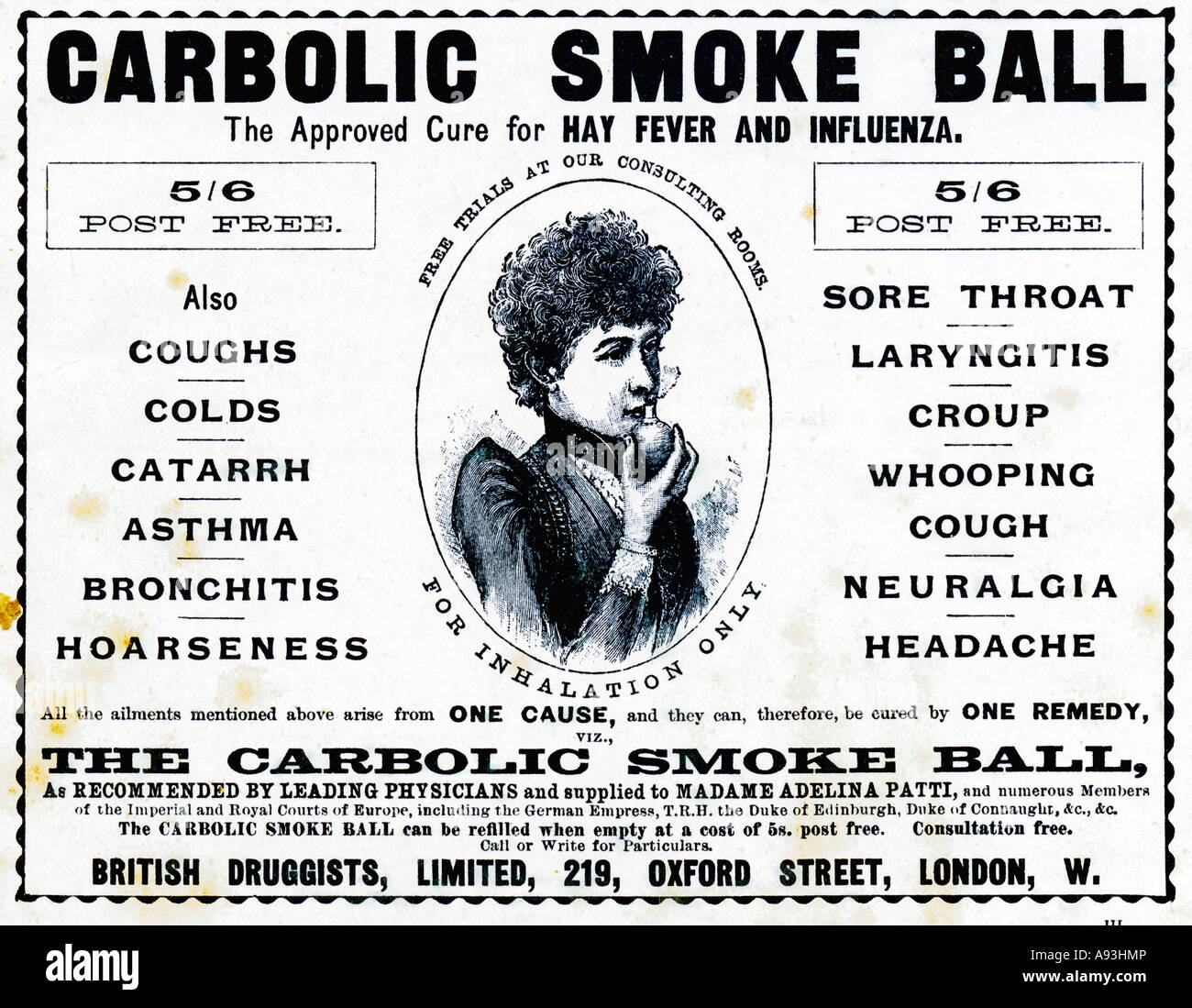
Carbolic Smoke Ball Co. [IN THE COURT OF APPEAL.] CARLILL v. CARBOLIC SMOKE BALL COMPANY. 1892 Dec. 6, 7. LINDLEY, L.J. [The Lord Justice stated the facts, and proceeded:—] I will begin by referring to two points which were raised in the Court below. I refer to them simply for the purpose of dismissing them.
Mrs Carlill v Carbolic Smoke Ball Co. (2021)

Get Carlill v. Carbolic Smoke Ball Co., [1893] 1 Q.B. 256, England and Wales Court of Appeal, case facts, key issues, and holdings and reasonings online today. Written and curated by real attorneys at Quimbee.
Carlill V Carbolic Smoke Ball Co PDF Common Law Contract Law

Carlill v Carbolic Smoke Ball Co [1893] 1 QB 256 Court of Appeal. A Newspaper advert placed by the defendant stated:-. £100 reward will be paid by the Carbolic Smoke Ball Company to any person who contracts the influenza after having used the ball three times daily for two weeks according to the printed directions supplied with each ball.
Carlill V Carbolic Smoke Ball Co PDF

Carlill v Carbolic Smoke Ball Company [1892] EWCA Civ 1 is an English contract law decision by the Court of Appeal, which held an advertisement containing certain terms to get a reward constituted a binding unilateral offer that could be accepted by anyone who performed its terms. It is notable for its treatment of contract and of puffery in advertising, for its curious subject matter.
😂 Carlill v carbolic smoke ball co 1893 summary. Carlill v Carbolic Smoke Ball Co. 20190116

The case of Carlill v Carbolic Smoke Ball [1] Company revolves around an advertisement published by the defendant, Carbolic Smoke Ball Company, promising a reward of £100 to anyone who contracts influenza after using their smoke ball product according to specified instructions. The plaintiff, Mrs. Carlill, purchased and used the smoke balls.
Carlill v The Carbolic Smoke Ball Company Queen's Bench Division 4 July 1892 [1892] 2 Q. 484
T he curious case of Carlill v the Carbolic Smoke Ball Company is one of the first that law students learn. Decided by the Court of Appeal in 1892, it set the framework for contract law and modern.
Carlill v Carbolic Smoke Ball Co Wikipedia Carlill v Carbolic Smoke Ball Co Carlill v
Carlill v. Carbolic Smoke Ball Company is one such landmark case that has earned a name and a necessary reference for law students. Its decision was given by the English Court of Appeals. Most importantly it became a landmark judgment due to its notable and curious subject matter. The presiding Coram was also very influential and well-founded.